
Why It’s Important to Buy Canadian Wine Over Wine From the United States
When considering wine purchases, many consumers are drawn to choices from around the world. While American wines, particularly those from regions like California, Oregon, and Washington, have long been popular, there are compelling reasons to consider Canadian wines, specifically those from Prince Edward County, as a worthy alternative. Here are several reasons why buying Canadian wine, particularly from Prince Edward County, can be an excellent choice:
1. Support for Local Agriculture and Economy
Buying Canadian wine supports the local economy and the agricultural sector. The wine industry in Canada, especially in regions like Prince Edward County, is still growing, and by purchasing Canadian wine, you help contribute to the growth of this young industry. Wineries in PEC are often family-owned or small-scale operations, meaning your purchase directly supports local farmers, winemakers, and workers. This support helps ensure the sustainability of the Canadian wine industry and the livelihood of those working within it.
In contrast, purchasing from U.S. wineries often means the economic benefit stays within the U.S. and doesn’t support Canadian farmers or businesses.
2. Unique Terroir and Regional Pride
Canada’s diverse climate and soil conditions, particularly in Prince Edward County, contribute to wines with distinct flavors and characteristics. The limestone-rich soils, the cooling effects of Lake Ontario, and the cooler climate create a terroir that is unmatched by many other wine regions, including those in the U.S. This gives Canadian wines, including those from PEC, a unique flavor profile.
Choosing Canadian wine allows consumers to experience a different range of flavors that reflect the specific regional characteristics of the area. It’s also an opportunity to showcase and enjoy Canadian craftsmanship, which is something consumers can take pride in when supporting homegrown products. This is particularly important in the context of the global wine market, where smaller regions like PEC are carving out their niche and gaining international recognition.
3. Focus on Sustainability and Organic Practices
Many Canadian wineries, especially in Prince Edward County, are committed to sustainable farming practices and organic winemaking. Sustainability is a key aspect of the Canadian wine industry, with many wineries opting for eco-friendly methods, such as using minimal intervention in the vineyard and reducing the use of pesticides. This ensures that the wines are not only high quality but are also made with an eye toward preserving the environment for future generations.
While some U.S. wineries also focus on sustainability, Canada’s wine regions, particularly PEC, have made significant strides in aligning their practices with environmentally conscious farming. Consumers who are environmentally aware and prefer products that prioritize sustainability may find Canadian wines, especially those from organic or biodynamic producers, more appealing.
4. Reducing Carbon Footprint
When consumers buy Canadian wine, especially from local regions like Prince Edward County, they contribute to a reduced carbon footprint. The transportation of wine, especially from international regions like the U.S., requires significant resources and energy, adding to the carbon emissions involved in getting the wine to consumers’ hands. By purchasing Canadian wine, consumers help reduce the environmental impact associated with shipping wines across long distances.
Additionally, supporting local wine means less reliance on importing, which further lowers carbon emissions and supports regional farming practices.
5. High-Quality Wine at Competitive Prices
Canadian wines, particularly those from emerging regions like Prince Edward County, offer a level of quality that is often comparable to more established wine regions. While wines from the U.S. can be high quality as well, Canadian wines, including those from PEC, provide exceptional value for the price. Many wines from the region are artisanal and hand-crafted, offering an exclusive and personalized experience at a price point that might surprise many consumers.
In some cases, American wines, especially those from well-known regions like Napa Valley, can be quite expensive, as the region is more established and has international recognition. By contrast, Canadian wines, still growing in prominence, can often offer excellent quality for more reasonable prices, allowing consumers to enjoy premium wines without the high cost.
6. The Rising Reputation of Canadian Wines
The reputation of Canadian wines, particularly those from Prince Edward County, is growing on the international stage. Canadian wines have consistently received high ratings and recognition in prestigious wine competitions and tastings. By purchasing Canadian wine, consumers are part of a growing movement that is pushing Canadian wines to the forefront of the global wine industry. It's an exciting time to explore Canadian wines as they become more widely recognized and appreciated for their quality and craftsmanship.
7. Cultural and National Pride
For many consumers, buying Canadian wine is a way to celebrate and support Canadian culture. Wine from Prince Edward County reflects the heritage, dedication, and hard work of Canadian winemakers, and purchasing it helps foster national pride. When Canadians support their own local industries, they are contributing to the development of a world-class wine culture within their own borders. Similarly, Canadian consumers may feel a stronger connection to wines produced in their own country, as they reflect a piece of Canadian history and craftsmanship.
Conclusion
While American wines have long been dominant on the global stage, Canadian wines, particularly from regions like Prince Edward County, offer a unique, high-quality alternative that supports local economies, sustainable practices, and environmental consciousness. By buying Canadian wine, consumers are not only exploring a diverse range of exceptional wines but are also contributing to the growth and sustainability of Canada's emerging wine industry. Whether for reasons of taste, sustainability, or national pride, there are plenty of reasons to consider Canadian wines over their American counterparts.
#PrinceEdwardCountyWine #CanadianWine #SupportLocalWine #BuyCanadian #WineLovers #OntarioWines #CanadianWinemakers #SustainableWine #WineTourism #WineTasting #ExploreCanadianWine #PECWines #CoolClimateWines #OrganicWine #SupportLocalFarmers #TasteCanada #WineCountry #WineEnthusiasts #DiscoverPEC #CanadianWineCulture #WineOfCanada
Uncorking the Secrets: Why Prince Edward County is Ideal for Grape Growing
Prince Edward County (PEC) is an ideal place for growing grapes due to a combination of climate, geography, and soil conditions. Here's why it's so well-suited:
Cool Climate: PEC has a cool climate that allows grapes to ripen slowly and retain high acidity, which is essential for producing high-quality wines. The cool temperatures also help prevent over-ripening and preserve the grape’s natural flavors.
Lake Ontario Influence: The proximity to Lake Ontario plays a significant role in moderating temperatures. In the summer, the lake helps keep temperatures cooler, and in the winter, it provides some warmth, reducing the risk of frost damage. This lake effect creates a longer growing season, which is important for grapevines.
Unique Soil: PEC has a variety of soil types, but the region is known for its limestone and clay-rich soils. These soils provide good drainage while also helping to retain heat, which is crucial for growing high-quality grapes. The mineral content also adds complexity and unique characteristics to the wines.
Sunlight Exposure: The region benefits from plenty of sunlight during the growing season, which is key for photosynthesis and healthy grape development. The sunlight exposure combined with the cooling lake breezes creates a balanced environment for grape growing.
Winemaking Tradition: While this region is relatively new to wine production compared to places like Niagara or Bordeaux, its emerging reputation for producing cool-climate wines—especially Pinot Noir, Chardonnay, and Riesling—has gained recognition. This growing expertise, along with the proper environmental conditions, makes PEC an exciting area for winemakers.
All of these factors combined make Prince Edward County a gem for grape growing, producing wines with distinct, elegant flavors that reflect the unique terroir of the region.
A Memorable Wine Experience in Prince Edward County
Why You Should Visit Closson Chase and Lighthall Vineyards in Prince Edward County
Prince Edward County is quickly becoming one of Ontario’s most sought-after wine destinations, and for good reason. With its stunning landscapes, rich history, and exceptional wines, it’s no surprise that the region has earned a reputation for quality. Among the many wineries that call this area home, two stand out for their unique offerings, intimate settings, and dedication to quality craftsmanship: Closson Chase Vineyards and Lighthall Vineyards. Here's why these two wineries should be at the top of your must-visit list.
1. Closson Chase Vineyards: Where Passion Meets Perfection
Exceptional Wine Selection
Closson Chase Vineyards is renowned for producing some of the finest Pinot Noir and Chardonnay in Prince Edward County. Their signature wines are a direct result of their commitment to the region’s terroir—delicate yet expressive, with layers of complexity. Whether you’re a wine connoisseur or a casual enthusiast, the rich, balanced wines crafted here are sure to impress. The winery’s approach is to create small-lot, hand-crafted wines that allow the natural characteristics of the land to shine.
A Beautiful Setting
Closson Chase is housed in an iconic, bright purple barn that immediately captures your attention, making it one of the most visually distinctive wineries in the County. The picturesque setting, coupled with the lush vineyards and peaceful surroundings, creates a perfect backdrop for a memorable wine-tasting experience. Enjoy a glass of Chardonnay while soaking in views of the vineyard, or relax in the serene garden area that surrounds the tasting room.
Expertise and Hospitality
The staff at Closson Chase is passionate about wine and eager to share their knowledge with guests. The personalized attention you receive here makes each visit feel like a special, curated experience. The knowledgeable sommeliers guide you through their carefully selected wines, offering insights into the winemaking process and the nuances of each varietal.
2. Lighthall Vineyards: A Boutique Winery with Heart
Small-Lot, Handcrafted Wines
Lighthall Vineyards prides itself on producing artisanal wines with a focus on minimal intervention winemaking. Their approach is grounded in sustainability and respect for nature, resulting in wines that truly reflect the unique character of the County’s soil. From their crisp Rieslings to their delicate sparkling wines, Lighthall’s wines are celebrated for their elegance and balance. Each bottle tells the story of the land and the people behind it.
Sparkling Wine Specialists
One of the standout features of Lighthall Vineyards is their focus on sparkling wines. They have quickly gained a reputation for producing some of the finest traditional method sparkling wines in the region. With a nod to the classic French Champagne method, Lighthall’s sparkling wines are crisp, refreshing, and refined. Whether you’re a fan of bubbles or new to the world of sparkling wines, Lighthall offers an exceptional tasting experience that’s both educational and enjoyable.
Intimate and Personal Experience
Lighthall’s boutique nature makes for a more intimate, one-on-one experience. With fewer visitors, the staff can offer personalized wine-tasting sessions, taking the time to walk you through each wine and its distinct characteristics. You’ll also have the chance to speak with the winemakers themselves, gaining insight into their philosophy and winemaking techniques.
A Focus on Sustainability
Lighthall Vineyards is also committed to sustainability and eco-friendly practices. They’ve embraced organic farming and are dedicated to maintaining the health of the land for generations to come. For eco-conscious wine lovers, this commitment adds another layer of appreciation to their already exceptional offerings.
The Perfect Pairing: Visit Both Wineries
While each winery offers a unique experience, visiting both Closson Chase and Lighthall Vineyards gives you the opportunity to explore the diversity of wines Prince Edward County has to offer. At Closson Chase, you’ll be introduced to wines that highlight the distinctiveness of the region’s terroir, while Lighthall will offer a more artisanal approach with an emphasis on sparkling wines and sustainability. Together, they offer a balanced and enriching wine journey.
Conclusion: A Memorable Wine Experience in Prince Edward County
Whether you’re a seasoned wine lover or a newcomer to the world of viticulture, Closson Chase Vineyards and Lighthall Vineyards provide unforgettable experiences that will deepen your appreciation for the craft of winemaking. From the stunning setting of Closson Chase’s vibrant purple barn to the intimate, hands-on feel of Lighthall Vineyards, these wineries embody the passion, artistry, and dedication that make Prince Edward County a must-visit destination for wine enthusiasts.
So, next time you're in the County, take the time to visit these two gems—they’ll leave you with lasting memories and, no doubt, a few bottles to bring home.
The costs associated with operating a Winery versus a Brewery in Prince Edward County
Operating a winery versus a brewery in Prince Edward County (PEC), Ontario, comes with different cost structures, influenced by factors like production size, equipment, labor, and regulatory requirements. Here's a breakdown of key cost differences:
1. Initial Setup Costs
Winery: Starting a winery often requires more significant upfront investment. Land, vineyards, and specialized equipment like presses, fermentation tanks, and bottling lines can be costly. Vineyards themselves require time (several years) to become productive.
Land and Vineyard Setup: The land cost in PEC for vineyards can vary significantly, but you’re likely looking at an investment in the $100,000–$1 million+ range depending on acreage and location. Vineyard establishment can take 3-5 years to yield a harvest.
Winemaking Equipment: Winery equipment (e.g., wine presses, fermentation tanks, barrels) can range from $100,000 to $500,000 depending on scale.
Brewery: A brewery has lower land costs but still requires a substantial investment in equipment for brewing, fermentation, and packaging (e.g., kegs, bottling or canning lines). Setup costs for a small to mid-sized brewery range from $500,000 to $1 million or more.
Brewery Equipment: Brewing systems and fermentation tanks are relatively less expensive than winemaking equipment, but still require a significant investment—ranging from $200,000 to $500,000, depending on production capacity.
2. Land and Production Costs
Winery: Ongoing costs for a winery include vineyard maintenance (e.g., pruning, pest control, irrigation, labor), which can be significant, especially in the early years before the vineyard reaches full production. Wineries in PEC may also need to factor in climate-related challenges like frost protection or pest management. Annual costs could range from $50,000 to $200,000+ for vineyard upkeep.
Grape Production: With the cool climate of PEC, yield per acre may be lower than in other regions, and maintaining quality vines requires investment in good practices and labor.
Brewery: A brewery’s ongoing costs typically include raw ingredients like barley, hops, yeast, and water. Brewing and fermentation processes also require energy and labor, but unlike vineyards, they can be managed in-house with relatively more flexibility in production scaling. Ingredient costs may vary, but they usually total $50,000–$150,000 annually depending on scale.
3. Regulatory and Licensing Fees
Both wineries and breweries in Ontario face strict regulations and need various licenses, including:
AGCO (Alcohol and Gaming Commission of Ontario) License: Required for both wineries and breweries to sell their products.
Environmental & Health Regulations: Wastewater management and environmental compliance can be expensive for both types of businesses, but wineries often have higher environmental costs related to vineyards and land use.
Wine or Beer Production Licenses: There are specific licenses for wineries (vintners) versus breweries (brewers), with distinct costs and paperwork.
4. Marketing and Distribution Costs
Winery: Wineries often have higher marketing expenses due to the prestige associated with wine culture. Direct-to-consumer marketing through tours, events, and tastings is essential for wineries. Distribution through the LCBO and private stores also comes with significant costs, as wineries typically sell their products at a higher price point than beer.
Brewery: Breweries often have a more affordable entry point for customers, but face higher competition in the craft beer market. Marketing is still important, but breweries may have more variety and flexibility with distribution (e.g., cans, kegs for local bars, restaurants, or direct sales). However, packaging costs (for cans or bottles) can add up, especially if it’s a significant portion of sales.
5. Labor Costs
Winery: Labor costs for a winery can be higher, especially during harvest periods when additional staff may be needed for picking, sorting, crushing, and bottling. You also need skilled workers for the winemaking process itself, which could involve specialized knowledge.
Brewery: Breweries need skilled brewers, but the labor demands may not be as seasonal or intensive as a winery, depending on scale. However, brewers must ensure quality control, which requires expertise.
6. Maintenance and Long-term Costs
Winery: Over time, the cost of maintaining the vineyard (replanting, upgrading equipment) can add up. Wineries also need to invest in barrel storage, which can be costly and require dedicated space.
Brewery: Breweries also face ongoing equipment maintenance, but the technology used (e.g., fermenters, bottling lines) tends to be more standardized and scalable.
Summary:
Wineries tend to have higher initial setup and land costs due to the need for vineyards and specialized winemaking equipment. They are also more reliant on the seasonal nature of grape production and can face higher labor and maintenance costs in their first few years.
Breweries have lower initial land costs but still require substantial investment in brewing equipment and ingredients. They can scale more quickly and maintain flexibility in production, but distribution and packaging costs can be high.
In Prince Edward County, which is known for its wine region, wineries might have more access to a local tourist market, which could offset some operating costs. A brewery, on the other hand, might face more competition but can potentially operate at a faster pace with quicker turnaround times for production.
Norman Hardie Winery - Join Us on June 23rd – Fundraising Dinner with Norm’s Favourite Chef
Dear ,
Please join us on Sunday, June 23rd for a very special fundraising dinner. Norm’s great friend and favourite chef Xavier Deshayes will be here to cook alongside him for a delicious, elegant meal. All proceeds will go towards completing our ongoing Tawineyi Primary School building project, in collaboration with stone sculptor Chaka Chikodzi.
Norm is a firm believer in the importance of supporting education. Having spent much of his life in Africa, he is committed to helping build this school in Chaka’s home village. He truly believes that education is the best gift a child can receive.
Nelson Mandela said it best –
"Education is the most powerful weapon which
you can use to change the world.”
The evening will start with Norm hosting a tasting of library wines from his favourite past vintages. To snack on while tasting we will serve the freshest PEI oysters, house-cured trout, boerewors (South African farmers sausage) braiid/barbecued over the fire, and biltong (South Africa’s much nicer version of beef jerky).
Chaka Chikodzi, whose gorgeous work adorns the property and who has spearheaded this project in his home village in Zimbabwe, will give a tour of the sculpture garden and a brief presentation about the school.
Dinner will follow with wines specially chosen by Norm for the evening. Norm and Xavier will cook/collaborate/smile/laugh and put together a tremendous simple delicious meal for all the wonderful people who choose to come and support this initiative.
Norm will be absorbing 100% of the costs of the evening (wine, labour, food) so that all the proceeds go towards completing the school. We are asking for a minimum donation of $200 per person to the Tawineyi School Foundation, which you can send by clicking here. Please ensure that you add “For the Tawineyi School Foundation” to the notes of your donation, and then email joey@normanhardie.com to confirm your phone number and how many guests are in your party. A charitable donation tax receipt will automatically be generated for you. If you are in a position to donate more for your seat, we encourage you to do so.
We are limiting the evening to 60 guests. The evening will begin at 5:30pm sharp and wrap up by 9pm (before the mosquitos descend). Dinner will be served al fresco overlooking the sculpture garden, with indoor seating available in the case of rain. We truly hope you can join us for this magical and important evening.
Read on to hear more about Norm and Xavier’s history and to see a great picture of both of them from 30 years ago.
Cheers,
Norm
Norm and Xavier met at the Four Seasons Beverly Hills when Xavier was working for Michelle Richard. Norm convinced Xavier to come to Toronto and be the chef at Truffles at the Four Seasons Toronto, a post he held from 1993-1996. At the time Truffles was the only 5-diamond restaurant in Canada. In October 1996 Norm came to Oregon for harvest, and Xavier moved to the U.S.. For 10 years he was Executive Chef for the Ronald Reagan Building & International Trade Center in Washington, DC, cooking for U.S. Presidents and world leaders. Norm and Xavier have remained great friends to this day.
Sandbanks Provincial Park/Reservations
Sandbanks Provincial Park is a provincial park located on Lake Ontario in Prince Edward County near Picton, Ontario, Canada. The park is considered one of the best sandy beaches in Ontario and contains the largest bay-mouth barrier dune formation in the world.
2026 Operating Dates
Opens for Camping - April 24, 2026 to October 26, 2026
Three expansive sandy beaches that some say are among the best in Canada; Outlet Beach is perfect for families, with shallow waters and gentle drop off
Location jutting out into Lake Ontario means that this park is a bird migration hotspot in spring and fall
Walking trails that allow visitors to experience the dune and wetland habitats of the park
Daily interpretive programming for the whole family during the summer months
Great starting point to explore Prince Edward County known for its bicycle touring, wineries, food, and antiques
Sandbanks is open from 8 a.m. to 10 p.m. during the summer, but make sure to book your entrance permits in advance to avoid disappointment.
Rules and Regulations
Please review the Rules and Regulations and Reservation Penalties for camping in Ontario Parks.
Please also review our privacy and security information.
You can request a refund for certain cancellations. Please use the Request for Refund form.
Visit these Twitter feeds for information about capacity and conditions at popular beaches in The County. These Twitter feeds are managed by the individual beaches and the municipality cannot guarantee the accuracy of the information. For Sandbanks and North Beach Provincial Parks, it’s best to check their reservation system for up-to-date availability of day use permits. For Little Bluff and Wellington Rotary Beach, if there are no recent Twitter updates, this generally means there is space available at the beach.
Visit the three Beaches at Sandbanks Provincial Park
Sandbanks Dune Beach - the most secluded of all the beaches in the park, The Sandbanks Dunes Trail, will bring you right through the massive sand formation
Lakeshore Beach - situated on the western shore of Lake Ontario, gently sloping into the water. Much longer than Outlet Beach, it stretches from West Point in the south 7 km to the village of Wellington in the north.
Outlet Beach - is the most widely known. With its expansive, two-kilometer-long shoreline, and soft, white sand. A day-use-only beach, you're required to book your visit in advance to guarantee entry.
Length of Stay - Car Camping in 2026
The maximum length of stay for car camping at select parks is seven or fourteen nights between July 1 and the Saturday of the Labour Day long weekend. Click on the link for up to date information for 2026. https://www.ontarioparks.ca/reservations/rules
The maximum stay on a campsite at all other parks and during off-season is twenty-three consecutive nights.
Stays that overlap with July 1 and the Saturday of the Labour Day long weekend may be eligible for longer stays as follows:
Parks with a 7-night maximum length of stay
Arrivals between June 15 and June 30 can book a maximum stay to the departure date of July 8.
Arrivals that begin 7 days before the Saturday of the Labour Day weekend will be eligible to book a maximum stay of 23 nights.
Parks with a 14-night maximum length of stay
Arrivals between June 22 and June 30 can book a maximum stay to the departure date of July 15.
Arrivals that begin 14 days before the Saturday of the Labour Day long weekend will be eligible to book a maximum stay of 23 nights.
Book your daily vehicle permit in advance!
Advance Daily Vehicle Permit Rules
Daily vehicle permits are available in advance of arrival at participating parks. Buying your permit for one of these parks in advance gaurantees your spot.
Advance daily vehicle permits can be purchased up to 5 days before your visit starting at 7:00am ET.
Daily vehicle permits purchased in advance are non-refundable and no changes may be made to your arrival date or park.
If you are driving a different vehicle than the one you originally identified at the time of booking, only the registered permit holder can change the vehicle licence plate information. To do so please log onto your Ontario Parks account and click the “Preregister” button on the reservation detail page, or update with park staff upon arrival at no additional cost.
Seasonal vehicle permit holders MUST obtain an advance daily vehicle permit to guarantee entry. Seasonal vehicle permits must be displayed during your visit.
Daily vehicle permits purchased in advance are only valid for the park they were purchased for; they cannot be used to gain entry to other provincial parks.
A daily vehicle permit is required for each day you visit, you are required to carry proof of purchase when arriving at the park either by having a digital or printed copy of your confirmation letter.
For more information on purchasing daily vehicle permits in advance, please visit our day use page.
Bookings can be made five days in advance at: https://reservations.ontarioparks.com/
Print out your Reservation
The advantage at Sandbanks is the bypass lane, For those folks who print out their reservation and place it on the dashboard of their vehicle, they can simply use the bypass lane without having to engage with park staff.
Reservations
Annual Day-Use Vehicle Permit 2026
$99.00 CAD + HST of 13%
Description
Summer Day-Use Vehicle Permit 2026
$75.00 CAD + HST of 13%
Description
Check out the Sandbanks website for all day use fees https://www.ontarioparks.ca/fees/dayuse/2026
Reservations Online
Reserve your car campsite, backcountry campsite, roofed accommodation, group campsite or day-use facility (picnic shelter) now.
***RESERVATIONS BY PHONE - (613) 393-3319
Call Toll Free:
1-888-ONT-PARK (1-888-668-7275)
Outside North America
1-519-826-5290
CAMPING
Sandbanks offers over 500 car campsites in five campground areas: Outlet River A & B, Cedars in the East Lake sector, Richardson’s in the West Lake sector and the Woodlands Campground located between East and West Lake sectors of the park. Campsites in these campgrounds accommodate equipment ranging from tents only to large trailers. Amenities such as water taps, comfort stations and laundry facilities are close by.
Outlet A with its many waterfront sites is very popular with campers. A few sites offer electrical service. This is a busy campground with sites that are grouped relatively close together. Outlet B offers a bit more privacy with some sites along the Outlet River and a loop with electrical pull-through sites.
Cedars is a family oriented campground offering more sheltered, private campsites. It has less traffic than the Outlet campgrounds but the beach is still close by.
The Woodlands Campground offers both shady and sunny sites. Sunny sites are preferred by fall campers when temperatures are cooler. All sites in the Woodland Campground offer electrical service. Swimming, boating and the Visitor Centre are only a short distance away.
Richardson’s Campground also offers a mix of sunny and shady sites. Richardson campground offers 19 campsites that are electrical.
We also offer 2 roofed accommodations, Jacques Cottage – a quaint 1.5 story cottage right on the shores of Lake Ontario which sleeps up to 6 and the majestic Maplerest Heritage House a short walk to the Dunes Beach and the infamous sand dunes.
Plan Your Perfect County Adventure - Combine your camping with a visit to some local Wineries, Breweries, Cideries & Distilleries. Reserve your Private & Exclusive Tour - CALL: + 1 613-955-0732
Free Door-to-door pick up & drop off from anywhere in Prince Edward County is included in the tour price. ( We pick up and drop off at Sandbanks Provincial Park.)

Lake on the Mountain - Prince Edward County
Lake on the Mountain Provincial Park
Lake on the Mountain Provincial Park is a provincial park located in Prince Edward County, Ontario, Canada. The park has an area of 104 hectares. Other than a viewing platform, parking area, and an illustrated sign explaining the physical structure of the eponymous lake, there are no facilities in the park. Wikipedia
Address: 296 County Rd 7, Prince Edward, ON K0K 2T0
What You'll Like:
The lake is a natural curiosity with a constant flow of clean, fresh water, with no apparent source
60 metres above Lake Ontario with views towards the Bay of Quinte, the Glenora Ferry and the north shore
Great picnic spot if you are exploring Prince Edward County
Day-use park, no camping
Lake on the Mountain Resort
Lake on the Mountain Resort is a seasonal family run business located on the beautiful and mysterious Lake on Mountain, one of Ontario’s natural wonders. The resort is perched over 62 metres above Lake Ontario and has spectacular views of the Bay of Quinte (Adolphus Reach) below.Our family has owned and operated the resort for the past 30 years. We are truly a family run resort and are involved in every aspect of the business. Not a day will go by where you won’t find at least a few of us serving or hosting guests at one of our two restaurants, brewing beer at our craft brewery, cutting grass at the property, welcoming cottage guests or any other number of things. This is not just our business but it is our home and we are excited and proud to welcome and share our beautiful property with you.
Lake on the Mountain Brewery
In 2007 we opened a small onsite brewery at our resort and began brewing two styles of beer, ‘Cream Ale’ and ‘Country Brown’. Due to their popularity we continued brewing our original two beers but added several different styles to our line up. Previously these beers were only available at our restaurants ‘The Inn’ and ‘The Miller House’

Sandbanks Provincial Park/Reservations
Sandbanks Provincial Park is a provincial park located on Lake Ontario in Prince Edward County near Picton, Ontario, Canada. The park is considered one of the best sandy beaches in Ontario and contains the largest bay-mouth barrier dune formation in the world.
Advance reservations for day use vehicle permits are required to access Sandbanks and North Beach Provincial Parks. Bookings can be made five days in advance at reservations.ontarioparks
Reservations by Phone
Call Toll Free:
1-888-ONT-PARK (1-888-668-7275)
Outside North America
1-519-826-5290
Hours of Operation:
363 days a year (closed Christmas Day and New Years Day)
Car Camping
Sandbanks offers over 500 car campsites in five campground areas: Outlet River A & B, Cedars in the East Lake sector, Richardson’s in the West Lake sector and the Woodlands Campground located between East and West Lake sectors of the park. Campsites in these campgrounds accommodate equipment ranging from tents only to large trailers. Amenities such as water taps, comfort stations and laundry facilities are close by.
Outlet A with its many waterfront sites is very popular with campers. A few sites offer electrical service. This is a busy campground with sites that are grouped relatively close together. Outlet B offers a bit more privacy with some sites along the Outlet River and a loop with electrical pull-through sites.
Cedars is a family oriented campground offering more sheltered, private campsites. It has less traffic than the Outlet campgrounds but the beach is still close by.
The Woodlands Campground offers both shady and sunny sites. Sunny sites are preferred by fall campers when temperatures are cooler. All sites in the Woodland Campground offer electrical service. Swimming, boating and the Visitor Centre are only a short distance away.
Richardson’s Campground also offers a mix of sunny and shady sites. Richardson campground offers 19 campsites that are electrical.
Group Camping
Sandbanks has two group campsites that vary in size and can accommodate from 30 to 50 people. Water taps are nearby and vault toilets are on site. Outlet Beach is approximately 1 km away.
Reservations can be made online or by phone.
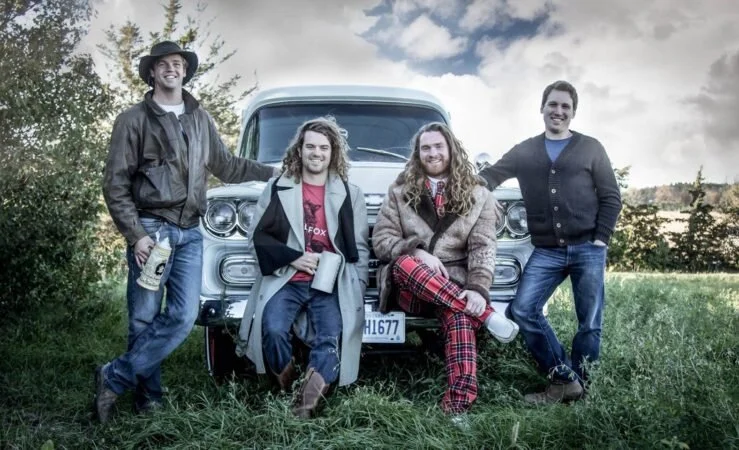
MacKinnon Brothers Brewing Co.
MacKinnon Brothers Brewing Co. is located on a bicentennial family farm, just outside of Kingston, Ontario. With over 200 years of farming heritage behind us, we use the hops, wheat, and barley grown right here on our farm to brew beer which is emboldened with the unique character of rural Canada. We do this so beer patrons everywhere can share in the taste and tradition of our farm.
Our ancestors settled in Upper Canada in 1784, and through the generations, built a thriving farm. We decided to add another element into the mix: a farm-based brewery. We’ve renovated century-old barns to house the equipment, and planted hops and malting barley in the surrounding fields. The character and history of this place shines through in every glass.